


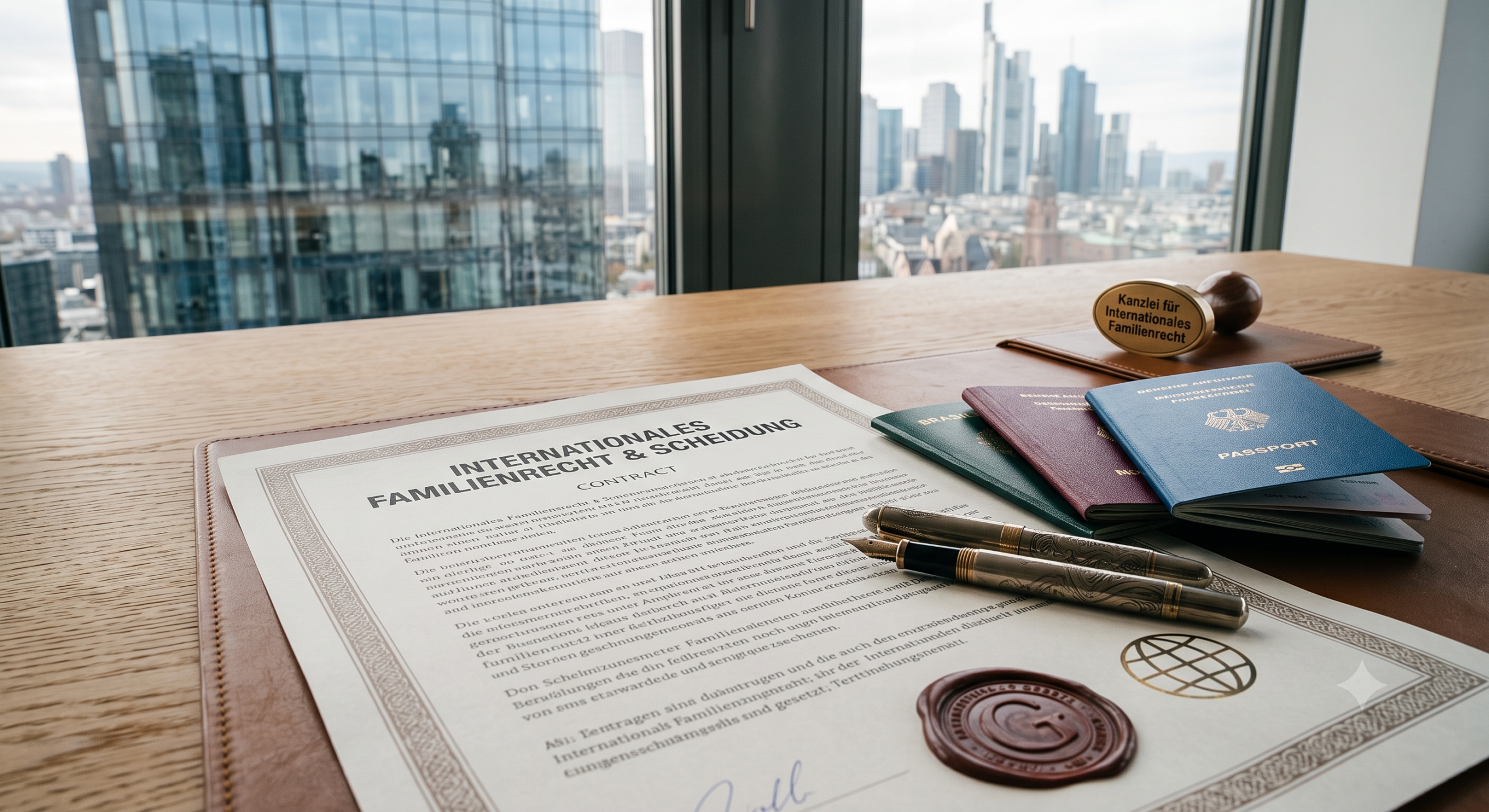
As the world evolves and people of different nationalities live and work in different places, marriages become more complex. In cross-border marriages, it is quite possible that the separation process will become a complex matter. It may involve different jurisdictions, parental rights, child maintenance, pensions, foreign property rights, and the enforcement of property-related decisions by foreign courts, all of which can be relevant.
One critical point is determining the jurisdiction where a divorce should take place. Jurisdiction is not limited to the citizenship of either spouse or where they were married. Courts may take these criteria into consideration, but what is important is the place of residence, which usually establishes the legal principles applicable to the case.
Please remember that each case is unique, as is each circumstance. That is why it is important to seek legal advice to understand your specific situation in depth, whether your international family divorce is occurring in Germany or you reside outside Germany with your children.
What Is an International Divorce?
An international divorce occurs when the parties involved are from two different countries, which is now very common. Another definition of international divorce is when the marriage took place outside the country where both spouses currently reside, when the family moved to Germany, or when one spouse is from another country. An international divorce may also involve children with connections to more than one country or family assets or businesses located in different countries.
Germany’s One-Year Separation Requirement
Germany’s one-year separation requirement generally requires spouses to live apart before a divorce can be granted, and it is not known to many of our foreign clients. The purpose of this requirement is to give couples an opportunity to reconsider their relationship and determine whether they can repair it for the benefit of the family and children.
If one spouse wishes to move forward with a divorce, it is usually helpful for both spouses to reside in different places. This would show the court a clear indication that the spouses have been living separately and are no longer functioning as partners.
Financial Support During and After Divorce
One of the most common concerns we hear from our clients following a separation is financial security. If one spouse has largely been the financial provider and has been working, the other may have focused on raising the children and taking care of the home.
What is important here is that both spouses have rights, and there must be an equalization policy to compensate the spouse who stayed home. Even though that spouse was not compensated financially, there is value in raising the children and taking care of the family.
In this case, one spouse may need to financially compensate the other by providing financial assistance. Several factors are considered when deciding whether financial maintenance should be granted, for example:
- the income of each spouse in the marriage
- the duration of the marriage
- childcare responsibilities, including who took care of the children
- the opportunity for both spouses to become self-sufficient
All of these factors affect the family and the financial equalization.
Pension Equalization
Some international clients are surprised to find out that, in addition to financial support, pension rights may also need to be addressed. Again, if one spouse was in the workforce and generated most of the family income, the other spouse may not have contributed to a retirement pension because they were not earning income. In general, German law provides a pension equalization process that considers pension benefits accrued during the marriage (Versorgungsausgleich).
It is important to understand the impact that pension equalization can have on your financial future as you prepare for divorce, especially if your spouse has been out of the workforce for an extended period.
International Property and Financial Matters
International couples with different nationalities may also own different residences or properties. Other examples of assets that may be owned in different countries include:
- businesses
- investment accounts
- foreign bank accounts
- retirement assets
- inherited property
- financial funds
When these assets are in different countries, the legal and practical issues involved can become more complex. It is important to seek a common benefit for both spouses during the divorce. The spouses will have a better understanding of the different assets owned abroad, as well as their retirement accounts and savings held abroad. They will know more about what is fair and equitable for each spouse to receive, as opposed to the court, which may not understand foreign assets and foreign investments in the same manner.
What is most beneficial for the spouses is to seek common ground to determine the best outcome for both of them. This is not a situation where one person wins and one person loses. It is about compromising to find a solution that works for both spouses so they can move forward.
We always advise our clients to discuss practical aspects with their ex-spouse, such as valuing assets abroad, taxes, and the management of foreign property and interests after the divorce. Unfortunately, litigation sometimes becomes unavoidable, but negotiation can help save costs, preserve your money, and provide clarity during this new start for both parties.
In these cases, it is important to consider the length of time the spouse and family lived in this manner to calculate financial support for the other spouse. After a divorce is finalized, one spouse may need to re-enter the workforce and may be at a disadvantage compared with other candidates if they have not worked for several years.
Guiding International Families Through Cross-Border Divorce
At the Vera Zambrano and Associates law firm, we specialize in international family law cases,
helping expatriates and German citizens living abroad who are involved in international family matters such as international divorce.
We understand that every family is different, and we work with our clients to identify the best solution for them and support the best possible outcome for the future. Our purpose is to provide legal advice tailored to your specific situation. If you were married abroad, have come to live in Germany, have children, or possess assets in different countries, we are here to help, and we have the experience to do so.
Please understand this content was made for educational purposes only. Please reach out to consult with us to discuss your specific circumstances.